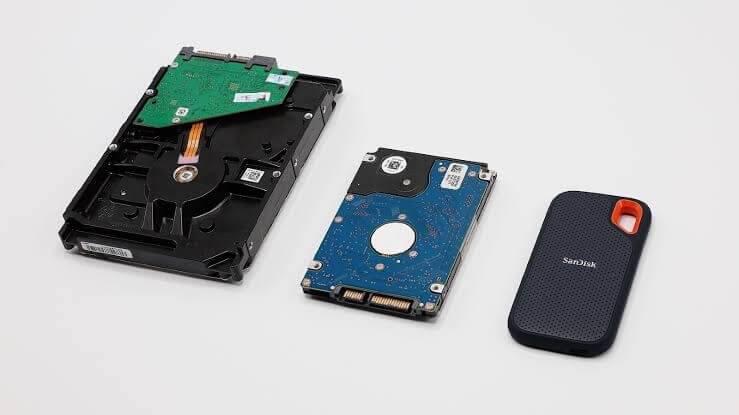
External storage devices enable scalable, rapid data access and durable preservation that power resilient architectures. They translate governance goals into actionable workflows, reducing latency and supporting reliable backups, sharing, and archiving. By offering structured options aligned with metrics, they equip organizations to measure data health, optimize costs, and accelerate analytics across workloads. The result is a disciplined data fabric with clear tradeoffs to evaluate, but the path forward hinges on choices that balance policy, performance, and longevity.
What External Storage Do for Digital Data
External storage devices serve as the foundational backbone of digital data management, providing scalable capacity, rapid access, and durable preservation across diverse workloads. They enable strategic data flows, measurable resilience, and accelerated analytics, while preserving user autonomy.
How to Pick the Right Drive for Your Needs
Selecting the right drive begins with aligning performance, capacity, and cost to explicit data goals; by quantifying access patterns, durability requirements, and lifecycle costs, organizations can map storage choices to business outcomes.
A visionary, metrics-driven lens guides a backup strategy and drive resilience, weighting reliability and cadence against speed and scale, enabling freedom-seeking teams to optimize data resilience and cost efficiency.
Practical Setups for Backup, Archiving, and Sharing
Practical Setups for Backup, Archiving, and Sharing translates the quantified principles of drive selection into actionable architectures, emphasizing how data governance goals translate into concrete workflows. The framework defines scalable backup strategies, modular archival workflows, and secure sharing protocols, enabling autonomous teams to meet compliance, reduce risk, and accelerate data access. Metrics illuminate success, guiding deliberate investments and ongoing optimization for freedom-seeking organizations.
Troubleshooting and Optimizing External Storage Performance
Could performance be optimized by disciplined diagnostics and alignments between workloads and storage paths?
The analysis concentrates on media formats, encryption methods, data transfer speeds, drive interfaces, and reliability factors, translating insights into actionable governance.
It champions proactive monitoring, targeted optimizations, and standardized benchmarks, enabling scalable improvements, reduced latency, and resilient architectures that empower users to pursue freedom with predictable, measurable storage performance.
Frequently Asked Questions
How Secure Are External Drives Against Theft or Loss?
External drives vary; no device is foolproof. They mitigate risk through encryption and access controls, yet physical theft remains a threat. A visionary, metrics-driven approach measures data breach likelihood, emphasizing hardened authentication to preserve freedom despite potential loss.
Do SSDS Outperform HDDS for Everyday Data Access?
Imagine a dashboard highlighting SSD performance superiority for everyday data access, while acknowledging HDD endurance limits. The comparison shows SSD performance consistently faster; HDD endurance remains steady but lagging in latency, influencing strategic decisions for freedom-loving, metrics-driven organizations.
Can External Storage Run as a Portable OS Drive?
Yes, external storage can run a portable OS drive, enabling a portable OS with drive portability independent of host. It envisions freedom, delivers measurable agility, and targets scalable metrics for seamless, host-agnostic computing across environments.
How Do Encryption and Password Protection Work on Drives?
Dreams aside, encryption and password protection work by transforming data into unreadable formats and locking access with keys or credentials. They optimize encryption basics and password management, measuring risk reduction and freedom through strategic, metrics-driven, visionary safeguards.
See also: How Cybercriminals Exploit Weak Security Systems
What Warranty and Reliability Should I Expect Long-Term?
Warranty reliability indicates steady long-term durability, with measured metrics guiding expectations; portability security remains high if properly managed, ensuring data access persists while minimizing downtime, empowering users to pursue freedom through resilient external storage investments.
Conclusion
External storage empowers organizations to scale data responsibly, align governance with real-world workflows, and quantify outcomes through meaningful metrics. By enabling faster backups, resilient archiving, and secure sharing, it transforms data into an auditable asset. For example, a mid-size retailer reduced recovery time by 60% after standardizing cross-site backups to external drives with automated validation, improving SLA compliance and data integrity. As data ecosystems mature, external storage becomes the strategic backbone for measurable, future‑proof data governance.
